
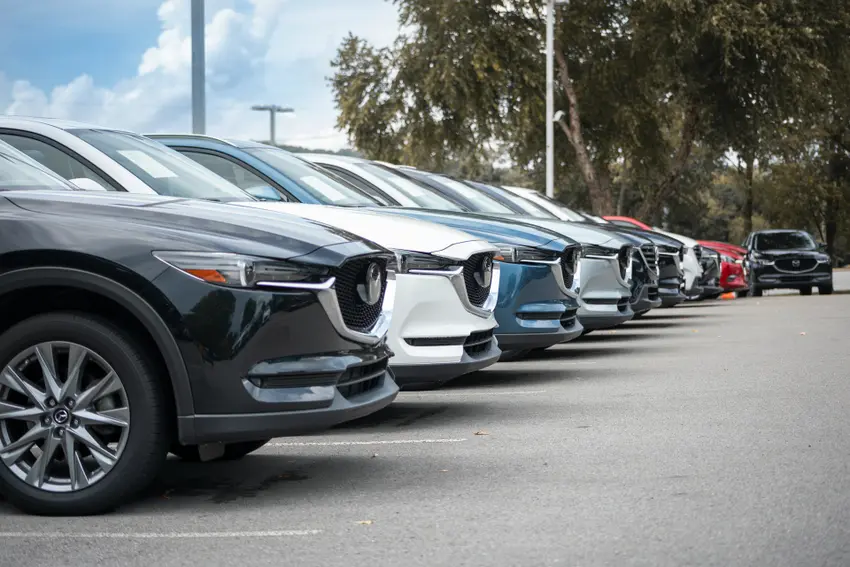
I recently went through the process of buying my car in Italy and had to weigh whether to go for a new or used vehicle. But trying to tally up the pros and cons on each side wasn't nearly as easy as I'd expected it to be.
Initially I wanted to get an old junker – in a city like Rome, where all the cars have scratched paint, why even try to have nice things?
But then a friend had a new-to-him used sedan completely break down while driving on the autostrada. Apparently the previous owner pulled some trickery to temporarily patch up some serious issues, and he ended up paying the meccanico what he'd 'saved' on the purchase price.
This isn't unique to Italy, of course; the same shady tactics are used to rip people off when buying cars anywhere. On the flip side, we all know the adage that buying a new car is pretty much the world's worst investment.
But there are some other aspects of buying a car in Italy that could tip the scale in one direction or the other when you make your decision.
No sales tax on owner-to-owner sales
A major plus to buying a used car in Italy – in particular from a private owner – is that you avoid paying the steep 22 percent sales tax (IVA).
Sales tax only applies when buying from a dealership, and it's built into the sticker price (as is done with all other goods sold in Italy).
However, with used cars you have to pay for the vehicle's ownership transfer – passaggio di proprietà – which currently ranges from €230 to €540, depending on the region and the car's power in kW.
You'll also have to pay to register the vehicle, regardless of whether it's new or used.
READ ALSO: Five things that surprised me about buying a car in Italy
Older cars have higher taxes and more limited mobility
While you can save on the purchase price by opting for an older model of car, you run into trouble with the EU’s emissions standards if it’s a traditional internal combustion engine.
In an effort to curb air pollution, the EU ranks the eco-friendliness of passenger vehicles from Euro 1 to Euro 6, with the new Euro 7 coming in late 2026.
READ ALSO: Why Italy is fighting EU plans to limit vehicle emissions
This environmental ranking factors into how much tax you pay on your vehicle (bollo auto), with older, more polluting cars costing more.
Most cars manufactured after 2015 fall into the Euro 6 category. You can check your vehicle’s environmental class here.
Driving a car with high emissions not only hurts your wallet but also impacts where you can drive – especially in northern Italy, where there are many Low Emission Zones (LEZ).
Older cars that don’t meet minimum Euro standards can’t drive in certain parts of the country and on certain days or months of the year. In central and southern Italy you’ll more commonly find LEZs in effect only during the winter months, which is the case in cities such as Rome and Naples.
You can find an interactive map of Italy’s LEZ zones here (green dots).
READ ALSO: Nine questions you need to ask in Italian when buying a second-hand car
Used cars aren't always significantly cheaper
A compromise between buying an old car and one fresh off the lot could be buying a newer model that's only been gently used. But in some instances but you may find you don't end up saving that much money.
A brand-new 2026 Toyota Yaris (a popular city car in Italy) in its base model is currently selling for a promotional rate of €19,950. If you check the used cars on Toyota's site, you'll see that a base Yaris from 2024 or 2025 goes for barely less than that, if not the same price.
Many models of cars hold their value pretty well in Italy. So the price difference between a new model and a gently used one may ultimately not be worth it when you consider that you may not be covered by a warranty.
When we were in the market for a car, we first went to see a used Renault Clio being sold on Subito. We nearly purchased it before learning that that model has continuous issues with the gearbox; in fact, the car we almost bought had already had its gearbox replaced once despite being only a couple years old and mostly sitting in a garage.
READ ALSO: Reader question: Can I buy a car in Italy if I'm not a resident?
Financing vs paying outright
There's also the financial consideration in terms of when and how you pay for a car. Of course if you buy a used car from a private individual you generally pay less overall than you would a new car or even a used car from a dealership, but there's no financing option – meaning you have to part with a large amount of money all at once.
However, you have to pay interest on your installments when you finance a car, and rates in Italy might seem high to you depending on where you've previously gone car shopping.
Interest rates for auto loans and financing are currently around 8–10 percent TAEG (the Italian equivalent of an APR). For example if you were to buy a new Yaris from Toyota right now, the website says the TAEG would be 8.98 percent.
However, financing a vehicle can be an attractive option for someone who has a low monthly budget.
For example, if you were to put € 6,600 down on a new Prius you could have a monthly payment as low as €129 for 47 months (with a final payment – the maxi rata finale – of €11,323 due at the end of your contract).
Complicated paperwork and peace of mind
There are other parts of the car-buying process that are difficult to quantify – namely the hassle and stress of navigating Italy's complicated bureaucracy.
When it comes to buying a used car, you're on your own with all the paperwork.
For us, it was worth buying a car directly from a dealership, which handles with most of the administrative aspects on the buyer's behalf.
Comments